

During the outbreak of the epidemic, the manufacturing industry was under great pressure to grow steadily.
As of February 19, 2020, according to real-time data, COVID-19 had 74280 confirmed cases, 5248 suspected cases, 2009 deaths and 14520 cured cases.
National prevention and control has achieved certain results, from January 31, the new suspected cases began to decline, February 1, the new suspected cases has dropped to less than 5000.
But the COVID-19 epidemic brought the first super black swan in 2020, and due to delays in resuming work, reduced demand and PHEIC recognition, the epidemic is bound to have an impact on China's manufacturing economy.
According to experts, it is expected that the current epidemic will affect the manufacturing industry in two ways in the short term:
After the festival, the resumption of work is delayed, the growth rate of production slows down, and the cost burden of enterprises is heavy.
Market demand may decline.
Butterfly effect, disruption of manufacturing supply chain.
China is the world's largest exporter of semi-finished products and an important part of the global supply chain.
The greater the impact of the epidemic on China's manufacturing industry, the greater the risk of damage in other areas.
Since 2005, about 20% of the world's manufacturing semi-finished products have been imported from Chinese factories, and foreign media have reported that the global automobile and mobile phone industries will be particularly affected by the epidemic.
The secondary industry is no longer the strongest main force in China, and the indirect impact of the epidemic may be greater.
In 2019, China's tertiary industry accounted for 53.9%, surpassing the secondary industry by 39.0%, while in 2003, the secondary industry accounted for the highest proportion, accounting for 45.6%.
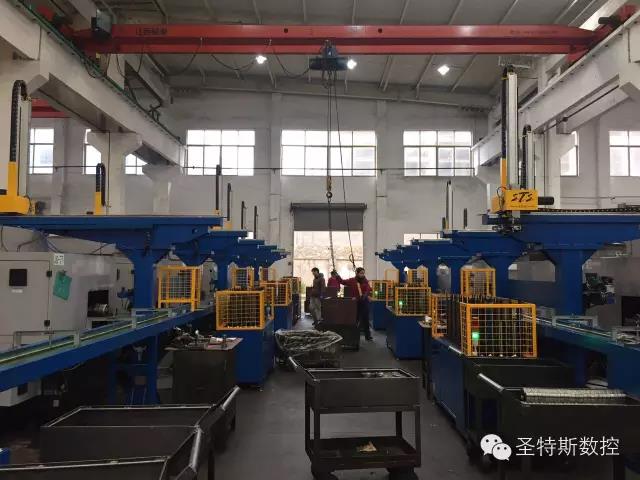
In general, the most direct impact of the epidemic is the third service industry, which is mainly catering, tourism, transportation and retailing, and the direct impact on the manufacturing industry is mainly reflected in the insufficient supply of labor, raw materials and so on. the impact transmitted by the tertiary industry is reflected in demand, order quantity, production mode and so on.
As the tertiary industry has become the main force of China's economy, the indirect impact of this epidemic on the manufacturing industry is stronger than that in the period of SARS.
Spare parts and engineers are hard to find, and mobile phone brands are in a dilemma.
India, the second largest smartphone manufacturing cluster in the world after China, has long relied on China to import smartphone components such as batteries, display panels and camera modules. but now China's mobile phone parts manufacturing base will face the risk of production disruption.
Taiwan's Foxconn and Wituang Group are famous contract factories for mobile phone brands such as Apple, Xiaomi, Yijia and Samsung, with production bases in the mainland and India, but at present, bases in both countries are facing the risk of shortage of mobile phone accessories.
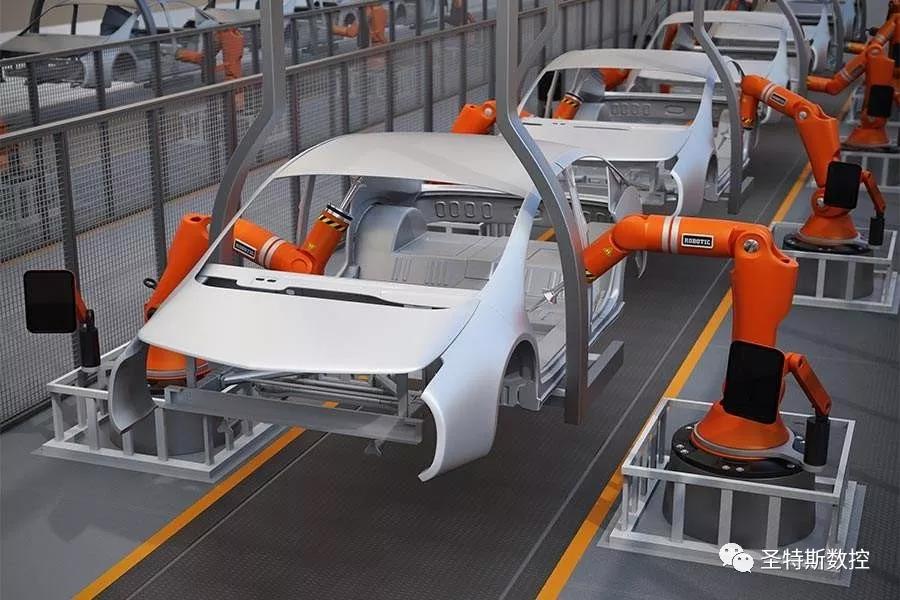
Take iPhone, for example, about 50% of the global production stronghold of its supply chain is in China.
Foxconn is one of its main contract factories. Previously, the most important production stronghold of iPhone, Zhengzhou Foxconn, had to postpone the start date scheduled for Feb. 10 by another week, and the recovery rate is expected to reach only 40%. 60%.
Analysts predict that iPhone shipments will fall by 10% in the first quarter of 2020 due to new product production, delays and other factors.
As senior industry analyst Patrick Moorhead said: "it is impossible for the supply chain to be completely undisturbed by the epidemic, and production will be disrupted if there are major problems in raw materials, manufacturing, assembly, testing and transportation."
The travel restrictions on overseas technicians is also another concern.
CNBC reported that most international technical teams regard China as the first choice for manufacturing products, but due to the outbreak, most companies will restrict the travel of technical engineers to China, which also affects product development and production, and ultimately affects the rupture of the industrial chain.
With different levels of automation, the manufacturing industry has enhanced its ability to fight and repair.
Although the fundamentals of this epidemic are not as good as those of SARS, with the development of technology, the overall automation level of China's manufacturing industry has far exceeded that of 2003.

Nowadays, most of China's manufacturing industry has gone through the automation stage, and the whole process has entered into digitalization.
According to statistics by wind, the labor success rate of China's secondary industry in 2014 is double that of 2003.
At the same time, according to the data of China Economic Information Society, the development of intelligent manufacturing in China belongs to the second echelon in the world, which is stronger than South Africa, Brazil, India and other emerging manufacturing countries, but second to the United States, Japan and Germany.
With the support of machines, networks and software, China's manufacturing industry has greatly enhanced its ability to fight and repair.
__.
Uncertainty about the severity and duration of the epidemic and its impact on China's manufacturing sector and the global economy remains high.
Perhaps current inventories can help factories around the world continue to produce in the short term, or factories can find alternative sources of supply at home and abroad, but China, as the world's largest exporter of manufactured semi-finished goods, has an influence to be reckoned with. it is not easy to find alternative suppliers completely.
To be sure, the longer the impact of the virus, the greater the risk of damage to the global manufacturing supply chain. As a community with a shared future for mankind, we need to fight together and hope that life will return to normal as soon as possible.


